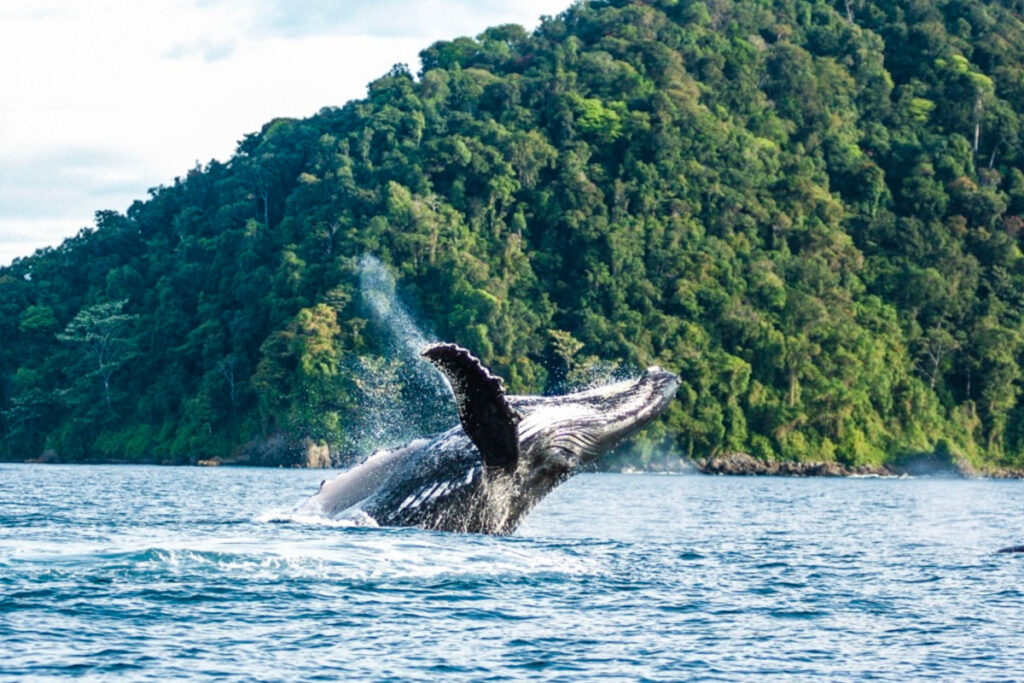
There are moments in life that stay with you forever, and seeing the back of a humpback whale breaking the water’s surface for the first time is undoubtedly one of them. Nuquí, where the jungle meets the sea with its vibrant energy, is one of the few places in the world where this encounter feels intimate and truly wild.
If you are planning your trip to Casa Balae with the hope of seeing these giants, the key lies in the calendar. While the Pacific is beautiful year-round, the whales have their own schedule and only visit us during specific months.
The Whale Calendar: From July to October
The official whale watching season in the Colombian Pacific begins in July and lasts until late October. During these months, thousands of humpback whales travel over 8,000 kilometers from Antarctica in search of the warm, calm waters of Chocó to mate and give birth to their calves.
July and August: The Start and Spectacular Breaches
At the beginning of the season, it is very common to see males competing for the attention of females. This translates into impressive breaches, tail slaps, and surface activity that will take your breath away. It is the time of highest energy in the ocean.
September and October: Time for the Calves
Towards the end of the season, the magic changes its tone. This is the period when you are most likely to see mothers teaching their calves how to breathe and jump. Sightings tend to be calmer and closer to the shore, as the whales seek shallow waters to protect their little ones from predators.
Why Choose Nuquí for this Experience?
Unlike other spots in the Pacific, Nuquí offers a much quieter and less crowded experience. Here, whale watching is done with a deep respect for the animals.
At Casa Balae, we are located in a privileged spot where, on the clearest days of the season, you can even see the whales’ blows from a distance while enjoying a coffee overlooking the sea. You don’t always need to spend hours on a boat; sometimes, nature decides to come and greet you right in front of our refuge.
Tips for Responsible Whale Watching
To ensure this experience is unforgettable for both you and the whales, it is vital to follow some basic recommendations:
-
Trust Local Guides: They understand the whales’ behavior and know how to maintain the necessary safety distance to avoid stressing them.
-
Patience and Silence: The sea has its own rhythms. Sometimes the whales appear immediately; other times, they keep you waiting. Silence on the boat even allows you to hear their blows and songs.
-
Zero Plastics: The Pacific is their home. Make sure not to leave any waste during your marine tours.
More Than Just Whales: The Charm of the Season
While the whales are the stars, traveling to Nuquí between July and October has other charms. It is a time when the jungle is at its peak, waterfalls are powerful, and the local gastronomy—based on what the sea provides—is at its best.
It is the ideal season to disconnect from city noise and tune into the heartbeat of the land and the sea.
Conclusion: Time to Pack Your Bags
If you’re looking for the short answer, August and September are the «golden months» for guaranteed incredible sightings in Nuquí. This is the heart of the season and when the magic happens most frequently.
At Casa Balae, we are ready to welcome you and help you organize this experience alongside local people who love and respect the ocean as much as we do. Don’t let another year pass without witnessing this miracle of nature; the whales are already on their way—are you?