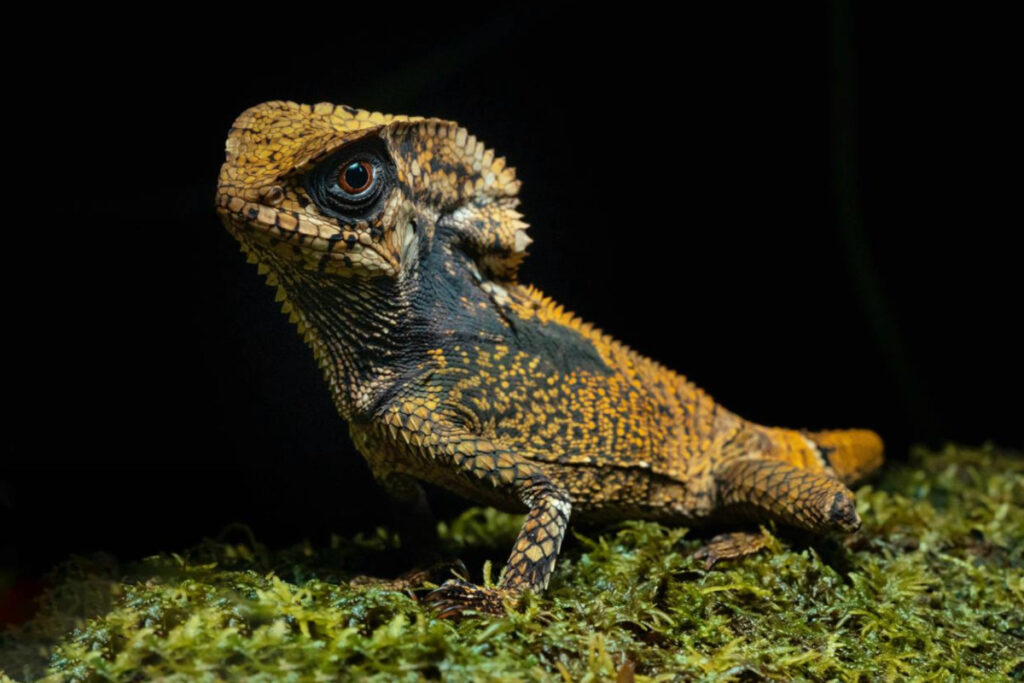
Herpetology in Chocó: A Global Hotspot
Chocó is one of Colombia’s richest regions in amphibian and reptile diversity. Its humid climate, dense rainforest, and proximity to the ocean create ideal habitats for endemic and rarely seen species.
Key facts:
-
Home to various poison frog species such as Oophaga solanensis, Dendrobates auratus, and Phyllobates aurotaenia.
-
Hosts emblematic snakes such as the Boa constrictor, Bothrops asper (fer-de-lance), and Corallus annulatus (tree boa).
-
Offers habitats for lizards such as the green iguana (Iguana iguana) and the Enyalioides heterolepis (dwarf iguana).
Iconic Species to Observe and Photograph
Frogs:
-
Poison frogs: Brightly colored and toxic species like Oophaga solanensis and Andinobates fulguritus.
-
Glass frogs: Hyalinobatrachium tatayoi and Teratohyla spinosa, with translucent skin revealing internal organs.
Snakes:
-
Non-venomous: Such as Oxyrhopus petolarius (false coral) and Leptodeira ornata (cat-eyed snake).
-
Venomous: Bothrops asper and Bothrops punctatus, which should be observed with extreme caution and only with expert guides.
Lizards:
-
Common: Green iguana and anoles (Anolis chloris).
-
Special: Dwarf iguana (Enyalioides heterolepis) and the spectacled caiman, a fascinating semi-aquatic reptile.
Wildlife Photography: Techniques for the Humid Pacific
Photographing in Nuquí requires adapting to the rainforest’s filtered light, high humidity, and the nocturnal activity of many species.
Practical tips:
-
Lighting: Use external flashes or soft light torches for nocturnal amphibians.
-
Focus: Prioritize manual focus to capture details such as skin texture.
-
Gear protection: Use waterproof covers and silica gel packs to prevent humidity damage.
-
Perspective: Shoot at ground level to portray the animal’s natural habitat.
Real-life example: Photographers documenting Hyalinobatrachium chirripoi have found that using natural backgrounds like leaves or moss enhances composition and highlights color contrast.
Safety and Ethics in Herpetofauna Observation
Respect for wildlife is essential, especially with sensitive or potentially dangerous species.
Best practices:
-
Do not handle animals unless in authorized scientific contexts.
-
Maintain a safe distance and use telephoto lenses for close-ups.
-
Avoid direct, intense light on animals’ eyes.
-
Respect natural activity schedules to avoid disrupting behavior.
Relevant fact: Most snake and frog species in the region play a key ecological role, controlling insect and small mammal populations.
Recommended Routes for Herpetology and Photography
-
Rainforest trails: Ideal for poison and glass frogs, especially after rainfall.
-
Streams and pools: Where amphibians gather at night.
-
Areas near mangroves: Home to caimans and tree-dwelling snakes.
-
Cerro Finito and Carrizalito: Elevated zones with microhabitats for lizards and iguanas.
Expert tip: Guided night walks offer the best opportunities to observe species active after sunset.
Nuquí is a destination where photography and herpetology meet in a unique setting. Its rainforests, rivers, and beaches are not only visually stunning but also home to wildlife that fascinates with its colors, rarity, and ecological importance.
For those seeking a different kind of experience in the Colombian Pacific, combining reptile and amphibian observation with nature photography is an extraordinary way to explore and document the richness of this territory—always with respect and environmental responsibility.